What does the VALORANT Champions Shanghai group stage decide for the sixteen teams chasing the world title?
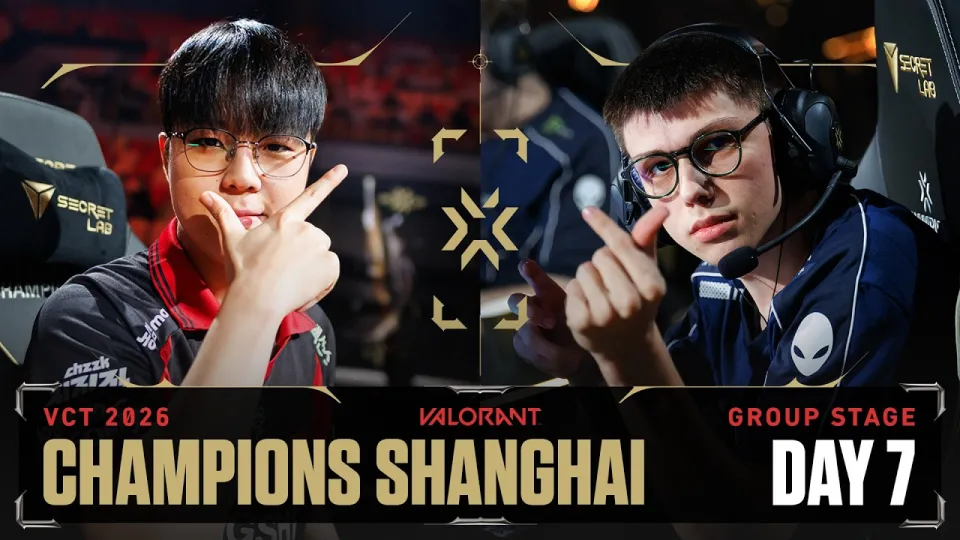
Video: VALORANT Champions Shanghai — Group Stage — Day 7
You can order the same kind of articles for your own video to boost it on YouTube and Google. Just message the Telegram bot @sat_sit_bot. It writes articles around your video, embeds the video and publishes them on popular niche websites (no ads). Free trial — 50 articles.
VALORANT Champions Shanghai is the final event of the 2026 VCT season, where sixteen teams from the Americas, CN, EMEA and Pacific play for the world title between September 24 and October 18. The group stage is the filter: it cuts the field down to the teams that reach the playoff bracket and eliminates everyone else. Day 7, published by the VALORANT Champions Tour, is a full broadcast block of that phase, and the official VALORANT Esports X account is where brackets, schedules and results are posted first.
What is VALORANT Champions and why does Shanghai matter
VALORANT Champions is the season-ending world championship of the VALORANT Champions Tour, the top tier of competitive VALORANT. Winning it is the single biggest achievement a roster can claim in a calendar year, which is why the event is treated as the measuring stick for every region.
Shanghai hosts the 2026 edition, and the framing from the broadcast is explicit: every era eventually meets its challenger. Two different Masters events in 2026 produced two different champions, so the year has no single dominant team. That makes Champions the tiebreaker between familiar organisations and a younger wave of challengers.
The format details that matter for viewers:
- Sixteen teams qualify through regional circuits across four regions: Americas, CN, EMEA and Pacific.
- The group stage sorts them into opening matches, then winners' and elimination matches, so a single loss does not immediately end a run.
- Only the teams that survive the group stage reach the playoff bracket, which is where the trophy is decided.
- Group stage series are best-of-three, so map picks, vetoes and pistol rounds carry enormous weight.
What happened on Day 7 of the group stage
Day 7 is a long broadcast day covering multiple series, and its defining feature was not a single highlight but the number of technical pauses. Viewers counted them in the live chat and in the comments under the upload, and the interruptions repeatedly reset momentum in rounds that were already tense.
That matters competitively. A tech pause freezes the economy state, the utility usage and the mental tempo of a map. Teams that had just lost a force-buy or were mid-execute have to restart their read of the opponent, and coaches get an extra window to talk. In a best-of-three group stage where one map can decide an entire season, those resets are not cosmetic.
The other recurring theme of the day was regional form. Comments under the broadcast argued that several teams outside CN looked stronger than the Chinese representatives on stage, and pointed at specific collapses: lost rounds against eco buys, failed 5v2 retakes and default setups that fell apart once the opponent adapted. That is the classic group stage diagnosis, and it is worth separating the noise from the pattern.
Reading the group stage like a coach
The group stage rewards teams that can win in three different ways: on their own map pick, on the opponent's pick, and in the decider. A roster that only wins its comfort map is a coin flip in a best-of-three.
Three signals to watch in any group stage series:
- Economy discipline. Losing to a save or an eco round in VALORANT costs more than one round; it hands the opponent a free buy and shifts the bonus economy. Multiple eco losses in one map usually mean a team is over-peeking or mis-reading the opponent's buy.
- Post-plant and retake structure. Failed 5v2 retakes are rarely about aim. They are about staggered entries, missing utility and no plan for the last two players alive.
- Adaptation after the first loss. The strongest group stage teams change their default tempo after losing a map, rather than repeating the same setup with better aim.
The critique aimed at CN teams in the comments fits this framework: when set strategies work, the rounds look clean; when the opponent breaks the script, the rounds look lost. That is a coaching problem as much as a player problem, and it is exactly what the group stage exposes before the bracket punishes it permanently.
Why tech pauses keep appearing on stage
Technical pauses at a global event come from several sources: peripheral failures, server or client issues, and stage hardware problems. Tournament organisers handle them with referee oversight so no team gains an information advantage, but the audience experience suffers.
What viewers can do about it:
- Use the broadcast's spoiler-free timestamps if you are watching the VOD and want to skip dead air.
- Treat a pause as a reset point when reviewing a map, because the round that follows often shows a different approach from both teams.
- Judge the series on the rounds after the pauses, not on the scoreline at the moment of the interruption.
Pauses are not evidence that a team is worse. They are evidence that a live LAN broadcast is a logistical operation, and the teams that stay composed through them usually look sharper in the closing maps.
The regional debate around CN and the rest of the world
The most heated conversation under the Day 7 broadcast was about whether China's representatives deserved their slots. The argument: other regions had stronger teams that did not qualify, so the CN field looked thin by comparison.
That argument is partly a format complaint, not a talent complaint. Qualification is earned through regional play, and every region gets representation because the international circuit is built on regional depth, not a global ranking. The fair version of the critique is narrower: if CN teams consistently lose eco rounds and 5v2 retakes on the international stage, the gap is in mid-round decision-making, and that is fixable with coaching and scrim quality.
The counterpoint is equally valid. CN rosters have produced deep international runs before, and a single group stage day is a small sample. The bracket is where reputations are actually settled.
Useful links
- VALORANT Esports on X — brackets, schedules and official announcements
- VALORANT Esports on Facebook
- VALORANT Esports on Instagram
- VALORANT Esports on TikTok
- VALORANT on Twitch — live broadcast
What Day 7 means for the rest of Champions
Day 7 confirmed that the group stage at VALORANT Champions Shanghai is doing its job: it separates teams with flexible mid-round structure from teams that only win when their prepared plays land. The tech pauses were a distraction, not the story. The story is that no region has looked untouchable, which fits a season with two different Masters champions and no clear favourite heading into the bracket. Follow the official VALORANT Esports X account for the playoff schedule and results as the field narrows. This breakdown is based on the Day 7 group stage broadcast published by the VALORANT Champions Tour channel.
Key takeaways
- Sixteen teams from Americas, CN, EMEA and Pacific compete at VALORANT Champions Shanghai, running September 24 to October 18.
- The event crowns the 2026 VALORANT World Champion, the biggest trophy of the VCT season.
- Group stage matches are best-of-three and decide which teams advance to the playoff bracket and which go home.
- Day 7 of the group stage was marked by repeated technical pauses that broke the flow of several maps.
- Two different Masters champions in 2026 set up Shanghai as the deciding event between old names and new contenders.
Source: VALORANT Champions Shanghai — Group Stage — Day 7 · Markdown version
Questions & answers
How many teams play at VALORANT Champions Shanghai?
Sixteen teams qualify from four regions: Americas, CN, EMEA and Pacific. They start in the group stage, and only the survivors reach the playoff bracket that decides the world champion.
Why were there so many technical pauses on Day 7?
Technical pauses at a global LAN come from peripheral, client or stage hardware problems, and referees manage them so no team gains an advantage. They break momentum for players and viewers alike, but they are not a sign that a team is playing badly.
Do group stage losses eliminate a team immediately?
No. The group stage uses opening matches plus winners' and elimination matches, so a team can lose once and still advance. The exact path depends on the bracket, but a single defeat is not automatic elimination.
Is the criticism of CN teams at Champions fair?
It is partly a format complaint, since qualification runs through regional play rather than a global ranking. The narrower, fair critique is about mid-round decisions such as losing eco rounds and failing 5v2 retakes, which coaching can fix over time.